
Walk through most construction and contracting company websites and you'll notice a pattern pretty quickly: a lot of them look like they haven't been touched since the day they launched. Outdated project photos, a contact form that may or may not actually work, no real content beyond a services list. For an industry built on trust and reputation, that's a genuine missed opportunity.
Part of the problem is that construction companies often don't think of their website as something that needs ongoing attention, and part of it is that whoever set it up years ago probably picked whatever platform a nephew or a cheap freelancer suggested at the time, without much thought for what the business would actually need down the line.
Let's talk through what actually matters when choosing a CMS for a construction or contracting business, and which platforms tend to fit well.
What construction companies actually need from a website
Before getting into specific platforms, it's worth being honest about what a contracting website is actually for, because it's a bit different from a typical business site.
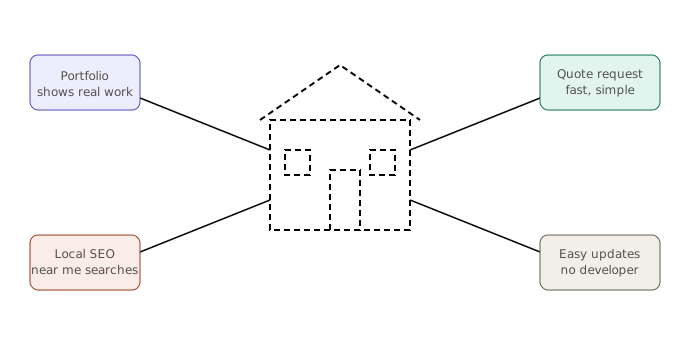
You need a strong visual portfolio, since showing finished projects is often the single most persuasive thing on the entire site. You need a fast, simple way for potential clients to request a quote or get in touch, since a slow or confusing contact process loses leads that would otherwise convert. You need solid local SEO, since most construction and contracting work is inherently local, people search for "roofer near me" or "kitchen remodel [city]," not generic national terms. And you need a site that's genuinely easy to update yourself, since most contracting businesses don't have an in-house marketing person keeping the site fresh.
With those priorities in mind, here's how the realistic platform options stack up.
WordPress
WordPress remains a strong default choice for construction and contracting businesses, mainly because of how well its ecosystem supports exactly what this industry needs. There are dedicated contractor and construction themes built specifically around project galleries, service pages, and quote request forms. Local SEO plugins make it straightforward to optimize for the geographic searches that actually drive business. And the sheer size of the plugin ecosystem means almost any specific feature you want, a project cost estimator, a before-and-after gallery, financing calculators, likely already exists as a plugin rather than requiring custom development.
The tradeoff is the same one that applies across industries: someone needs to handle occasional maintenance, updates, and security patches. For a contracting business, this usually means either a bit of internal comfort with basic WordPress management, or a modest ongoing relationship with a freelancer or small agency to keep things running smoothly.
Squarespace or Wix
For smaller contracting businesses, especially solo operators or small crews without any interest in managing a website beyond the basics, Squarespace or Wix can be a genuinely sensible choice. Both offer polished, professional-looking templates that work well for showcasing project photos, and both handle hosting, security, and updates entirely on their end, so there's essentially nothing to maintain beyond occasionally updating photos and content.
The tradeoff is flexibility. If your business grows and you eventually want more custom functionality, a detailed project database, integration with a specific CRM or scheduling tool, these platforms can start to feel limiting. But for a straightforward site focused on showcasing work and generating leads, that limitation may never actually matter.
Industry-specific platforms
There are also a handful of platforms built specifically for contractors and home service businesses, often bundling a website with lead management, scheduling, and sometimes even invoicing tools all in one place. These can be appealing if you want a single system handling both your web presence and some of your actual business operations, rather than stitching multiple tools together.
The tradeoff tends to be cost (these often run as ongoing subscriptions that can be pricier than a standard CMS setup) and flexibility (you're working within whatever that specific platform allows, rather than a broadly supported CMS with endless customization options).
What actually matters most in practice
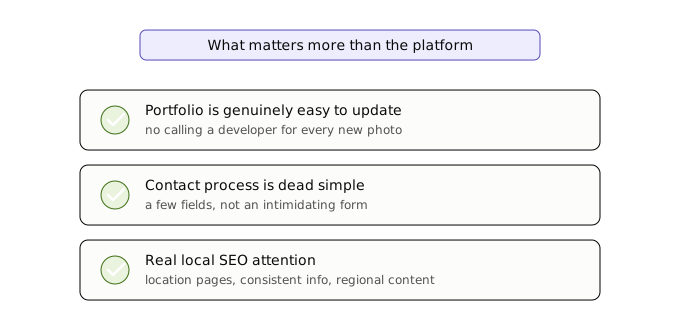
Whichever platform you land on, a few things matter more than the platform choice itself.
Your project portfolio needs to be genuinely easy to update. If adding a new set of before-and-after photos requires calling a developer every time, you'll stop doing it, and your site will slowly go stale exactly the way the ones we mentioned at the start did.
Your contact and quote request process needs to be dead simple, ideally just a few fields, not an intimidating multi-page form. Most potential clients comparing a few contractors will simply move on if getting a quote feels like a hassle.
And your site needs actual local SEO attention, proper location pages if you serve multiple areas, consistent business information across the web, and content that actually mentions the neighborhoods and regions you work in. This matters more for lead generation than almost any design choice you'll make.
The honest bottom line
For most construction and contracting businesses, WordPress paired with a contractor-focused theme and a bit of ongoing attention offers the best combination of capability, cost, and flexibility. For very small operations that want something they'll genuinely never touch beyond swapping photos, Squarespace or Wix can be perfectly sufficient. Industry-specific platforms make sense mainly if you want your website and business operations tools bundled together and are comfortable paying more for that convenience.
Whatever you choose, the platform matters less than actually keeping the site updated with real project work and making it effortless for potential clients to reach you. That's the part that turns a website from a static brochure into something that actually brings in business.
If you run a contracting business and have gone through this decision yourself, we'd genuinely like to hear what worked and what didn't. Real experiences from people who've actually built and maintained these sites are exactly the kind of content we want more of on this blog.