
Enterprise CMS licensing has a reputation for being confusing, and Kentico is no exception. Part of the confusion is genuine, because the pricing model has changed over the years. The rest comes from the internet itself, where articles about older and newer Kentico products get mixed together until nobody can tell which numbers apply to what.
So let's untangle it properly, starting with the question most people skip.
First, which Kentico are we talking about?
There are two generations of the platform in circulation, and they are licensed differently.
Kentico Xperience 13 is the older product. Its licensing was built around editions, commonly described as Business, Enterprise, and Corporate tiers, with the higher tiers adding things like personalization and marketing automation. Support for it ends on December 31, 2026.
Xperience by Kentico is the current platform, rebuilt on modern .NET with a different licensing model entirely. This is what Kentico sells today for new projects.
A lot of pricing articles online blend the two. If you see a number, check which product it belongs to before using it for budgeting. One more trap worth knowing about: Kentico also used to have a separate headless product called Kontent, which has since become its own independent company. Mixing the two up is a surprisingly common budgeting mistake.
The core idea: licensing by channel
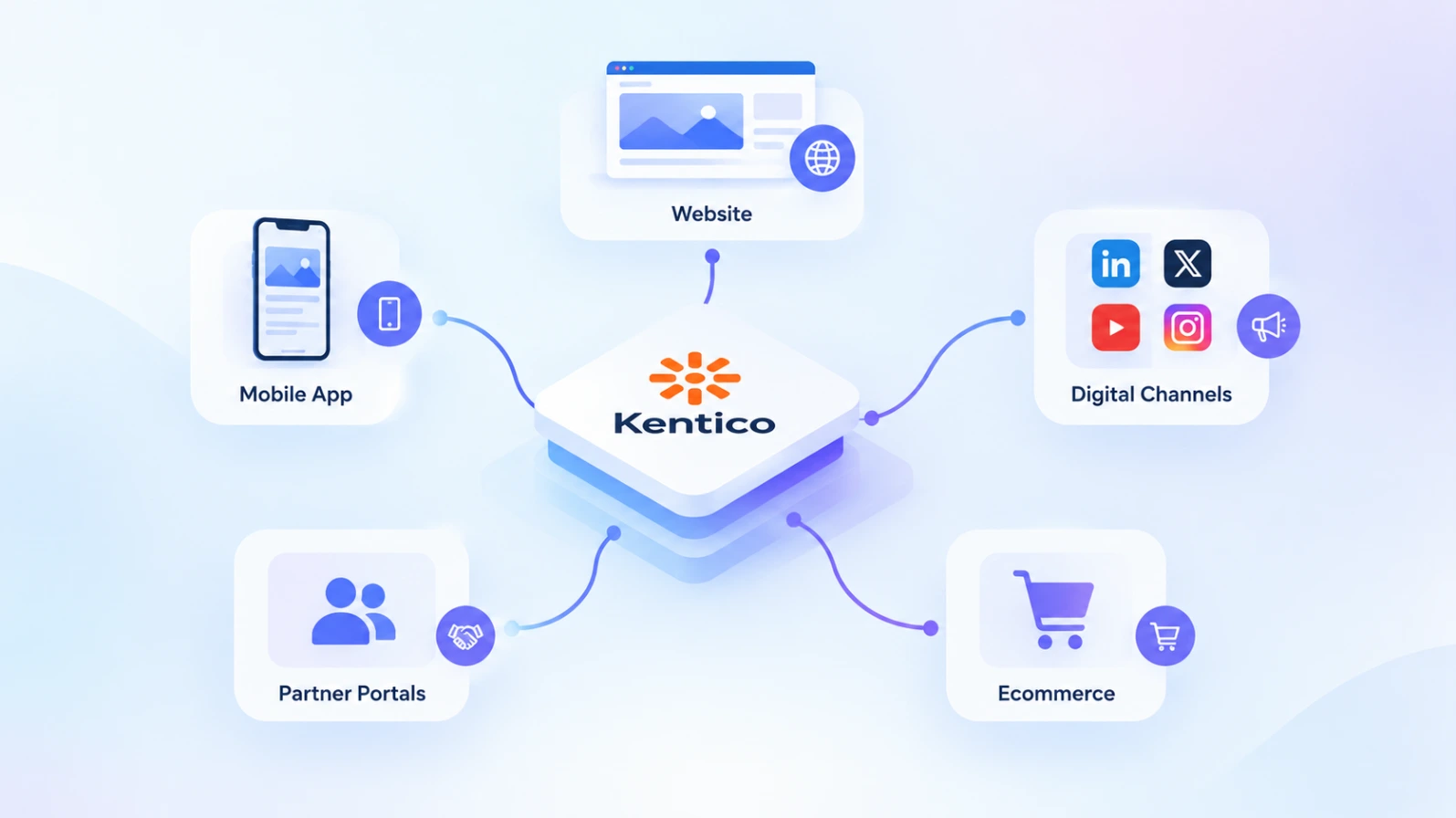
Xperience by Kentico uses a licensing model built around channels. You buy a platform license that includes one main channel, and additional channels cost extra.
In plain terms, a channel is a place where your content gets delivered. A website is the obvious example, and the platform is designed to manage content across other destinations too, which is where the multi-channel idea comes from. Kentico's own FAQ points out that buying several channels up front works out cheaper per channel than adding them one at a time later. That's worth remembering if you already know your plans for the next couple of years.
For the exact definition of what counts as a channel in your situation, ask Kentico or your implementation partner directly, because that detail drives your bill.
Two tiers: Standard and Advanced
On top of channels, you choose a license tier.
Standard is aimed at single-channel web projects. Some product features are limited, but you still get essentials like the page builder, which makes it a sensible fit for a straightforward website.
Advanced is aimed at multi-channel strategies and includes enhanced digital marketing features. If you plan to personalize experiences or run content across several channels, this is the tier to look at.
Two ways to host: SaaS or self-managed
The second big choice is where the platform runs.
SaaS is Kentico's managed option. It's sold as a fixed-cost subscription that bundles the license with pre-defined cloud resources, at what Kentico calls Cloud Levels 1 or 2. Kentico makes a point of contrasting this with consumption-based SaaS pricing, where the bill can climb unexpectedly with usage. Here, the cost is set by the cloud level you pick.
Private cloud or self-managed means you host and operate the platform yourself and pay for the license. You get more control over your infrastructure, but hosting, maintenance, and monitoring become your responsibility, and those costs sit outside the license fee.
AI usage is also part of how a purchase is configured, since Kentico's buying page lists AI credits alongside channels, tier, and cloud level.
So what does it actually cost?
Here's the honest answer: Kentico's official buying page lays out the options, channels, tiers, AI credits, and cloud levels, but doesn't publish dollar figures. Pricing is quote-based.
Third-party sources do publish numbers, and they disagree with each other. Depending on the source and the date, self-managed licensing is quoted anywhere from roughly $990 to $1,250 per month, and SaaS from around $1,990 to $2,900 per month. An older source cited annual figures of about $12,600 for license-only and $24,600 for SaaS. Those gaps come from different dates, different assumptions, and different project scopes.
Treat all of these as rough orientation at best. The only number that matters is the one in a written quote for your specific channels, tier, and hosting choice.
It's also worth remembering that the license is only one line in the budget. Implementation, content migration, integrations, training, and hosting for self-managed setups all add up, and one agency's estimate puts a three-year total for a mid-size deployment somewhere between $50,000 and $300,000 depending on scope and customization. That's a wide range from a single source, so use it as a reminder to budget beyond the license, not as a benchmark.
If you're still on Kentico 13
With support for Kentico 13 ending on December 31, 2026, many organizations are looking at this decision right now. Xperience by Kentico requires its subscription license model rather than the older one, and some sources mention that existing Kentico 13 subscription holders may be able to count that subscription toward the new one through a shared license arrangement. That detail comes from an older source, so confirm the current terms directly with Kentico before building it into your plan.
Questions to ask before you sign
- How many channels do we need today, and how many might we realistically need in two years?
- Is Standard enough, or do we need Advanced for the marketing features we actually plan to use?
- If we choose SaaS, which cloud level fits our traffic, and what happens if we outgrow it?
- If we choose self-managed, what will hosting and maintenance really cost us each year?
- How many AI credits are included, and what happens when we run out?
- What do renewals look like, and are there price increases built in?
- If we're moving from Kentico 13, what credit or transition terms apply to us?
- What level of support is included, and what costs extra?
The bottom line
Kentico licensing isn't unreasonably complicated once you break it into its parts: how many channels, which tier, and where it's hosted. The confusing part is that the real numbers only come through a quote, and the numbers floating around online are a mix of old, new, and different products.
Get a written quote based on your actual needs, compare it against alternatives like Optimizely or Sitecore on the same terms, and budget for everything around the license too.
If you've been through a Kentico purchase or renewal, we'd genuinely like to hear how it went, what surprised you on the bill, and what you wish you'd asked earlier. Real experiences with pricing are exactly the kind of content that's hard to find elsewhere.