
Financial services and insurance companies face a genuinely different set of website requirements than most other industries. It's not just about looking professional or ranking well in search, though both still matter. It's about handling sensitive customer data responsibly, meeting regulatory expectations, managing content across multiple products and regions, and doing all of that without slowing down the marketing and content teams who need to keep the site current.
Kentico is one of the platforms that regularly comes up in this space, positioned less as a simple CMS and more as a full digital experience platform. Let's look at why it fits this industry the way it does, and where it's worth a closer look.
Why financial and insurance companies need more than a basic CMS
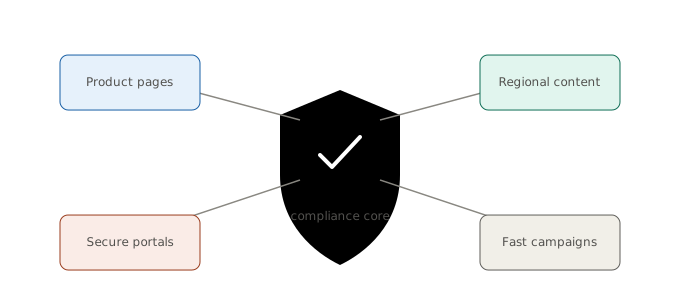
A typical small business website might have a dozen pages and a blog. A bank, insurance provider, or financial services company usually has something far more complex: product pages for dozens of financial products, region or state-specific content (especially relevant for insurance, where offerings and regulations often vary by location), secure client portals or account access areas, gated content requiring authentication, and marketing campaigns that need to launch and update quickly without waiting on developer availability.
On top of that, there's the regulatory layer. Financial and insurance companies operate under real compliance obligations around data handling, accessibility, and how information is presented to consumers. A CMS that treats these as afterthoughts rather than built-in considerations creates ongoing risk and extra manual work for compliance and legal teams.
Where Kentico tends to fit well
Kentico is built with marketing teams in mind as much as developers, which matters a lot in an industry where content changes frequently, new products, rate updates, regulatory disclosures, seasonal campaigns, and marketing teams can't realistically wait on development cycles for every update.
Its personalization and marketing automation capabilities are a genuine differentiator here. Financial services marketing often depends on showing the right product to the right visitor based on their behavior or profile, a mortgage visitor sees mortgage content, a small business banking visitor sees business banking content, without needing entirely separate sites or manual segmentation. Kentico's built-in tools for this kind of targeting reduce the need to stitch together separate marketing platforms.
Multi-site management is another area where Kentico tends to hold up well for this industry. Larger financial and insurance companies often need to manage multiple branded sites, different product lines, different regional entities, different subsidiary brands, from a single, centralized backend, rather than treating each as a completely separate website project.
Security and compliance considerations
This is understandably the area financial and insurance companies scrutinize most closely, and it's worth being precise rather than vague about it.
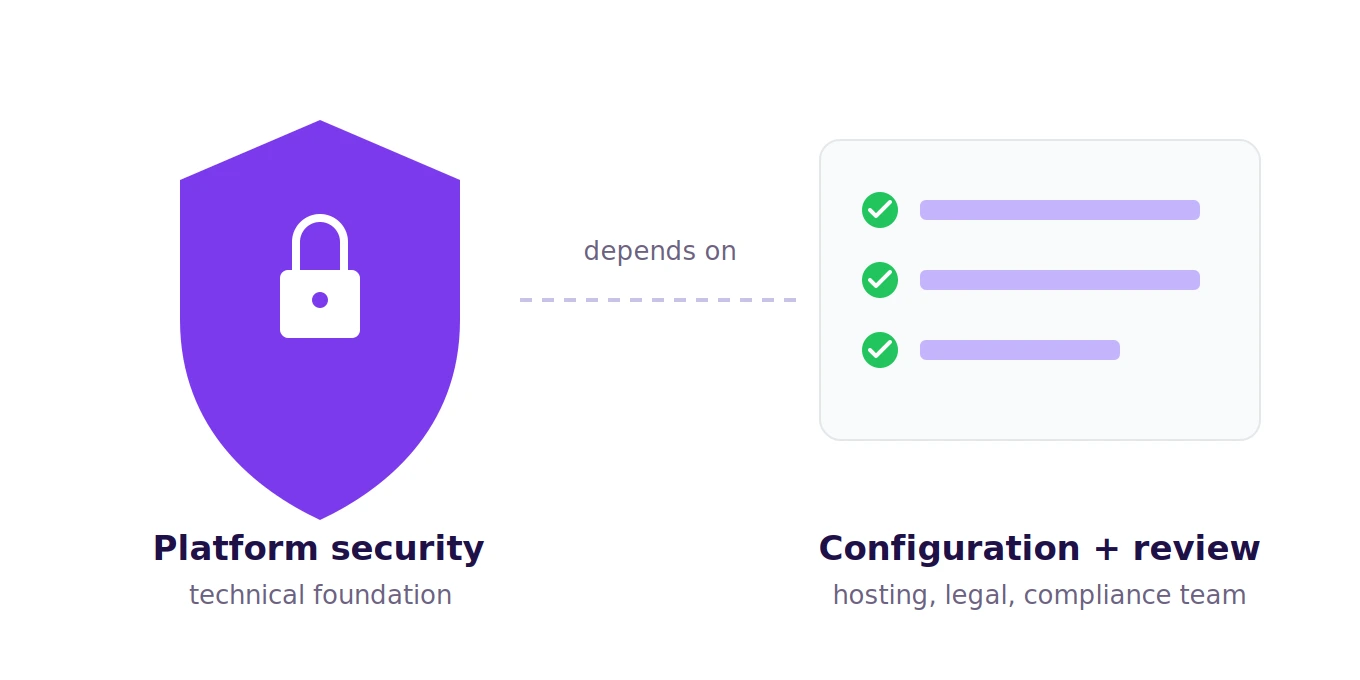
Kentico, like most enterprise-grade CMS platforms, provides a strong technical foundation for security: role-based permissions, audit trails, and infrastructure designed to support secure deployments. However, actual compliance with specific regulations (things like data privacy laws, industry-specific financial regulations, or accessibility standards) depends heavily on how the platform is configured, hosted, and maintained, not just which CMS you choose. No CMS makes you automatically compliant on its own.
If compliance is a major driver in your platform decision, the right move is to have your specific regulatory requirements reviewed directly against Kentico's current technical documentation and, ideally, with input from your legal and compliance teams, rather than relying on general marketing claims from any CMS vendor, including this overview.
The tradeoffs worth knowing about
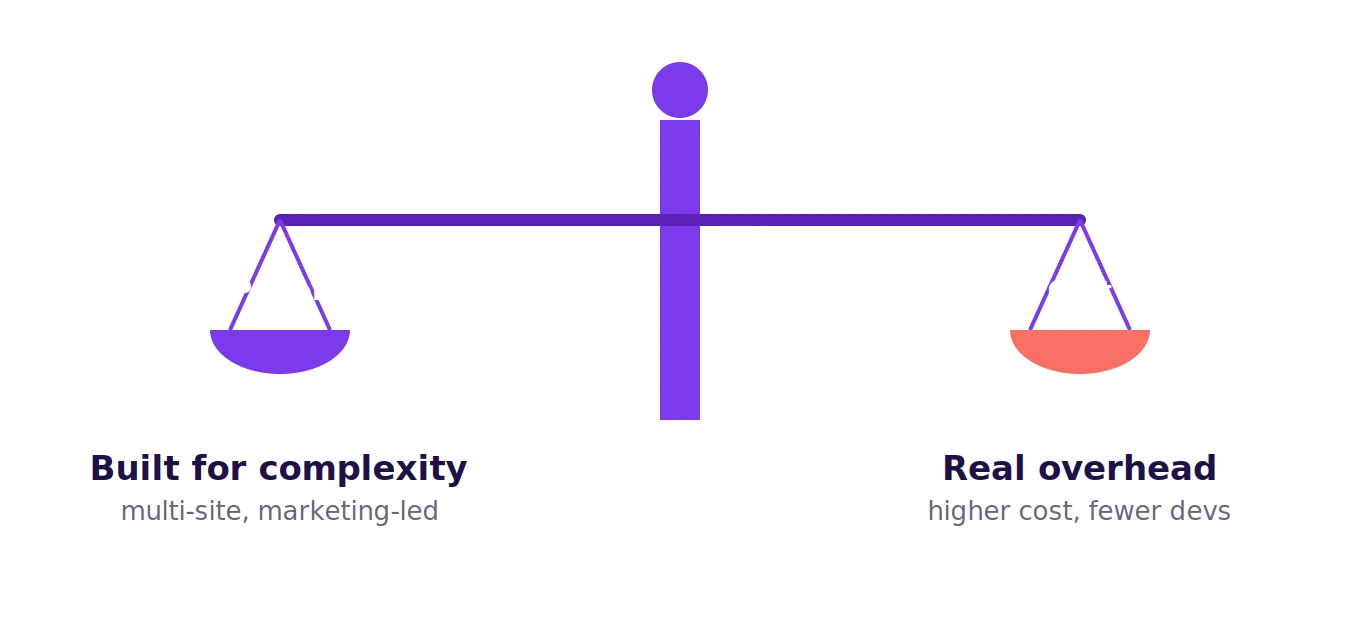
Kentico isn't the cheapest or simplest option available, and it's not meant to be. It's built for organizations with real complexity to manage: multiple sites, sophisticated marketing needs, and content teams who need real flexibility without constant developer involvement. For a small, straightforward business website, Kentico would likely be considerable overkill.
It also requires more specialized development expertise than something like WordPress, since it's a .NET-based platform with its own architecture and conventions. The pool of experienced Kentico developers is smaller than more mainstream platforms, which can affect both cost and hiring timelines for implementation or ongoing development work.
Is it the right fit for your organization?
If you're a financial services or insurance company managing multiple sites or product lines, running sophisticated marketing personalization, and needing a platform that content teams can operate independently of developers, Kentico is genuinely worth evaluating seriously. If your needs are simpler, a single site with straightforward content, the complexity and cost of a platform like Kentico may not be justified.
As always, the right choice comes down to matching the platform's actual strengths to your organization's real requirements, not choosing based on what similar-sized competitors happen to use.
If your organization has implemented Kentico, or evaluated it against alternatives like Sitecore or Adobe Experience Manager, we'd genuinely like to hear how that decision played out. Real experiences from the financial services and insurance space are exactly the kind of practical insight that's hard to find in generic CMS content.