
When people think about building an online store, platforms like Shopify or WooCommerce usually come to mind first, and for good reason, they're built specifically for e-commerce out of the box. Strapi isn't one of those platforms. It's a headless CMS, built primarily for managing content, not transactions. So why does "Strapi for e-commerce" keep coming up as a search term and a real architectural choice for some businesses?
The honest answer is that it depends heavily on what kind of store you're actually building, and how much control you want over the shopping experience itself.
What Strapi actually is (and isn't) for e-commerce
Strapi is a headless content management system. It's excellent at managing structured content, product descriptions, images, categories, blog content, and delivering that content through an API to whatever frontend you build. What Strapi is not, by default, is a complete e-commerce solution. It doesn't natively handle shopping carts, checkout flows, payment processing, inventory management, or order fulfillment the way a dedicated e-commerce platform does.
This distinction matters a lot. Using Strapi for e-commerce doesn't mean "install Strapi and get an online store." It means using Strapi as the content layer of a custom-built e-commerce architecture, typically paired with a separate commerce-specific system or custom-built commerce logic layered on top.
Why some businesses choose this approach anyway
Despite not being a purpose-built e-commerce platform, there are real reasons development teams choose Strapi as part of an e-commerce stack.
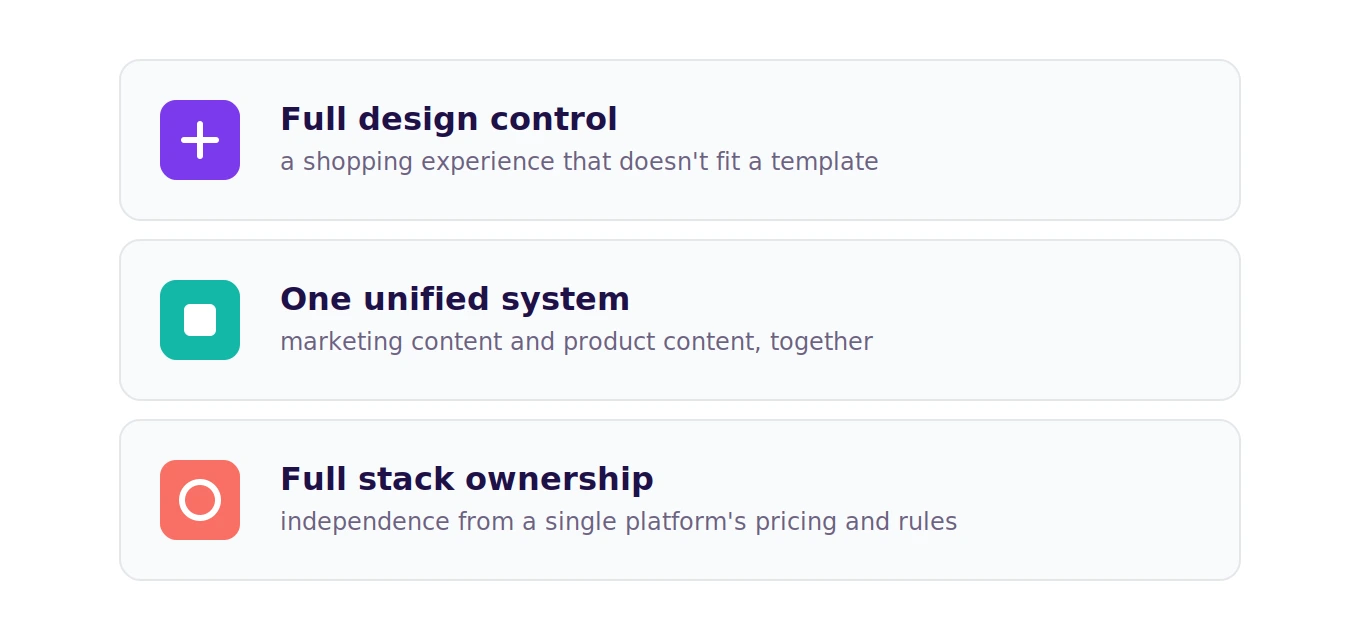
If you're building a highly custom shopping experience, one that doesn't fit neatly into what a platform like Shopify allows, Strapi's flexibility as a headless CMS gives your frontend developers complete control over the buying experience, product presentation, and content, without being boxed into a template-driven platform's constraints.
If you're already managing a content-heavy site, a blog, resource library, or marketing content alongside your product catalog, and want a single, unified content system managing both your marketing content and your product content, Strapi can serve as that shared backend, with commerce functionality handled through integrations or a separate service.
If your team already has strong development resources and wants full ownership of the entire stack, rather than being dependent on a specific e-commerce platform's roadmap, pricing changes, or limitations, building on Strapi alongside a dedicated payment and commerce layer gives you that independence, at the cost of needing to build and maintain more of the system yourselves.
What you'd actually need to build around it
If you're seriously considering Strapi for an e-commerce project, it's worth being clear-eyed about what else needs to be part of the stack. You'll need a separate payment processing integration, Stripe being a common choice, handled either through custom backend logic or a dedicated commerce service. You'll need cart and checkout logic built into your frontend application, since this isn't something Strapi provides natively. You'll need inventory and order management, either built custom or through a specialized commerce backend that Strapi's content feeds into. And you'll need to handle things like tax calculation, shipping logistics, and order fulfillment, all of which are handled automatically by dedicated e-commerce platforms but require deliberate engineering work in a Strapi-based custom setup.
This is a meaningfully larger scope of work than spinning up a store on Shopify or WooCommerce, and it's important to go in with realistic expectations about that.
Who this approach actually makes sense for
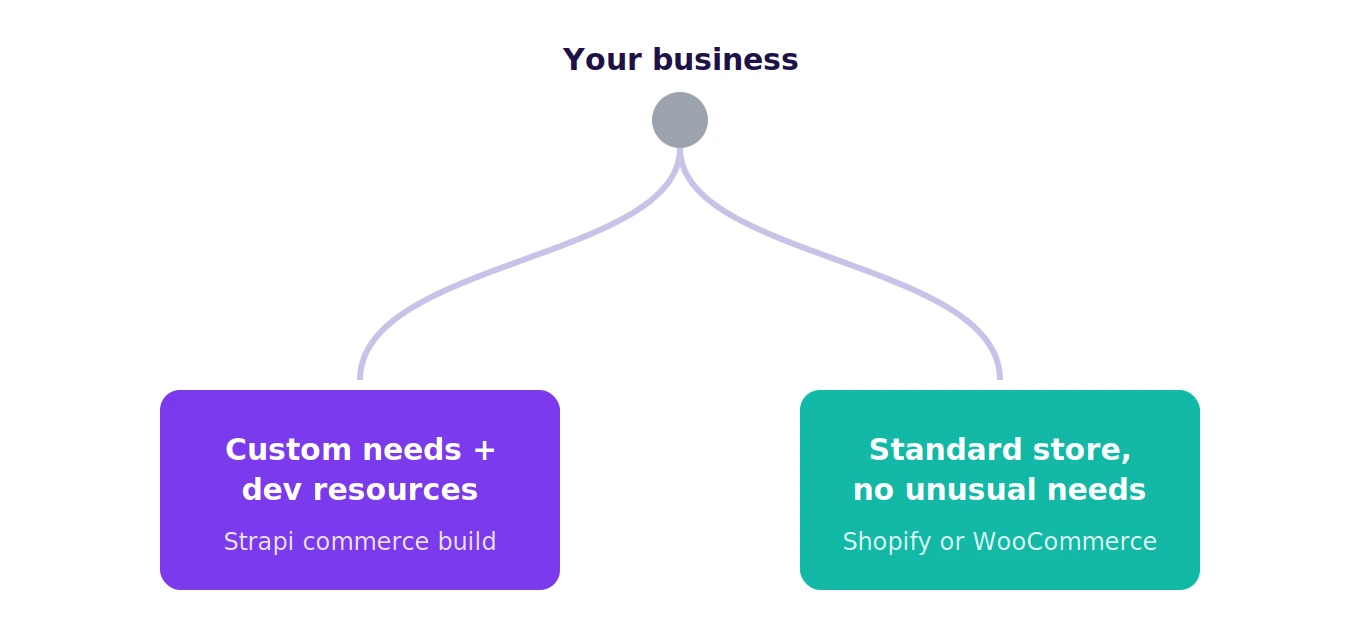
Strapi for e-commerce tends to make the most sense for businesses with specific custom requirements that off-the-shelf platforms genuinely can't satisfy, strong in-house or contracted development resources capable of building and maintaining a custom commerce stack, and a real need for content management flexibility that goes beyond typical product catalog needs, publishers with commerce components, media companies selling merchandise alongside content, or businesses with complex multi-channel content and commerce needs.
For a standard online store, a small to mid-sized business selling products without unusual custom requirements, a dedicated e-commerce platform like Shopify or WooCommerce is almost certainly the more practical, cost-effective, and faster path to a functioning store. The complexity of building a custom Strapi-based commerce stack simply isn't justified unless you have a genuine reason to need that level of customization and control.
The honest bottom line
Strapi isn't an e-commerce platform, and treating it like one without understanding what needs to be built around it leads to underestimated timelines and budgets. But as the content layer within a larger, custom-built commerce architecture, it can be a genuinely strong choice for businesses with the technical resources and specific needs to justify that complexity.
If you're evaluating this approach for your own project, or have already built a Strapi-based commerce stack, we'd genuinely like to hear how it went, what worked, what took longer than expected, and whether you'd make the same choice again. Real experiences like that are exactly the kind of content we want more of on this blog.