
Financial services content doesn't get published the way a typical marketing blog post does. A rate change, a disclosure update, or new product copy often needs sign-off from compliance before it ever goes live, and if something goes wrong later, someone needs to be able to show exactly who approved what, and when. This is a genuinely different content operation than most websites need, and it's worth looking at specifically rather than as an afterthought to a general "is Umbraco good" conversation.
Why governance matters more here than almost anywhere else

In most industries, a content mistake is embarrassing. In financial services, it can be a regulatory problem. Incorrect rate information, an outdated disclosure, or a product claim that wasn't properly reviewed can create real legal and compliance exposure, not just a bad customer experience.
That reality shapes what actually matters in a CMS for this industry. You need to control precisely who can edit, approve, and publish specific types of content. You need a reliable record of what changed, who changed it, and who signed off on it. And you need a structured path content follows before it goes live, not an honor system based on people remembering to loop in the right reviewer.
What Umbraco provides out of the box
Umbraco's core platform includes role-based user permissions and a content item history that logs changes over time, which gives you a reasonable baseline: you can control who has access to what, and see a record of edits made to a given piece of content.
For straightforward sites, this core functionality is often enough. But financial services organizations typically need something more structured than basic permissions and a change log, specifically, a defined, multi-stage approval process that content has to pass through before publishing, with clear accountability at each stage.
Where Umbraco Workflow fills the gap
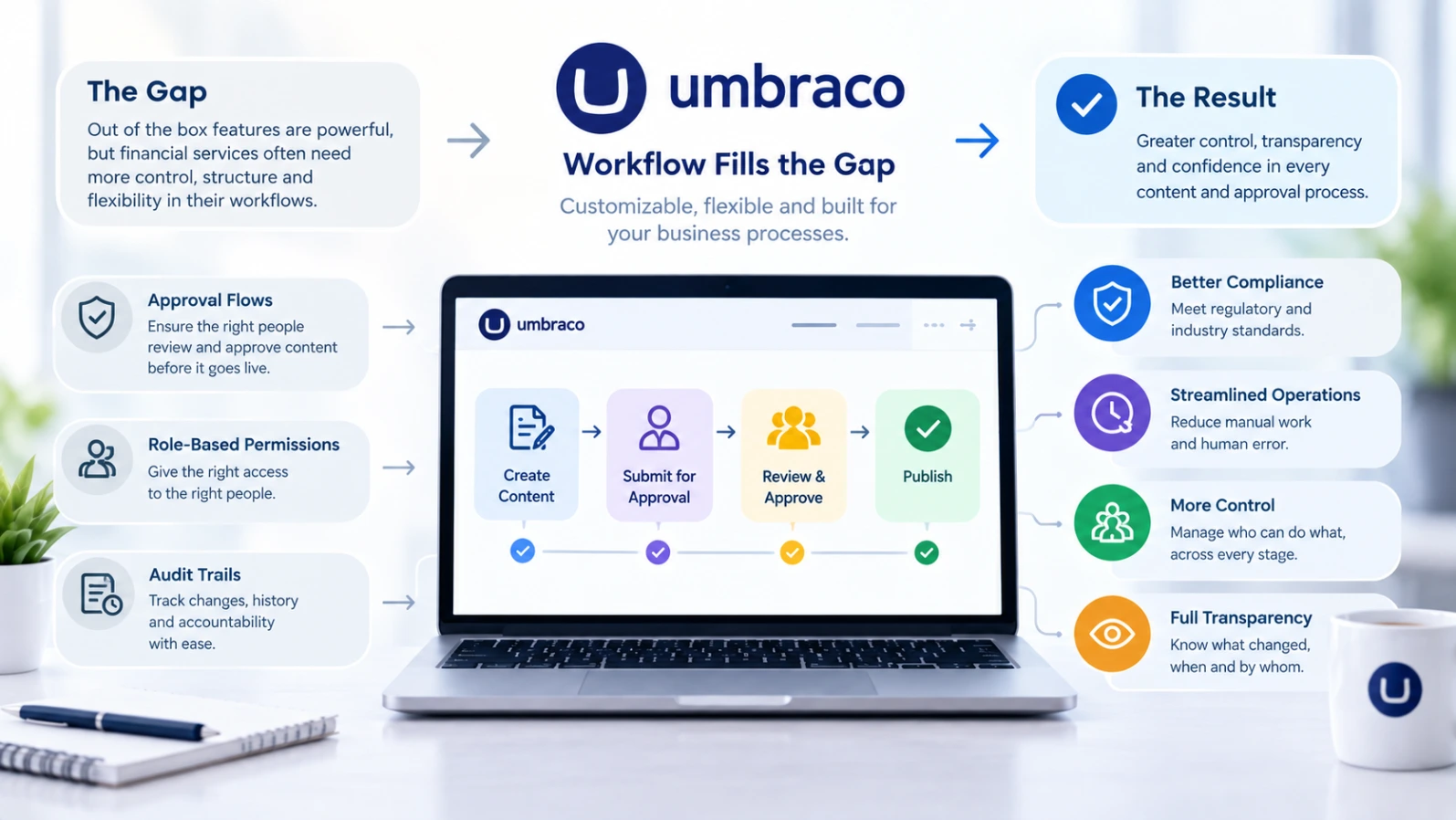
This is where it's important to be precise: the more sophisticated governance capabilities, multi-stage approval chains, granular approval groups, and detailed workflow audit trails, come from Umbraco Workflow, an official add-on product from Umbraco HQ itself, rather than being built into the Umbraco core platform by default.
Umbraco Workflow lets you define approval steps for content, assigning specific users or roles responsible for reviewing and approving changes before they publish. You can set this up at the content node level or at the document type level, meaning you could require a compliance review specifically for product and rate pages, while allowing more routine content, a blog post or a general informational page, to follow a lighter or no approval path.
The permissions in Umbraco Workflow go beyond simple publish access. You can configure fine-grained control over who can view, edit, or publish specific content types or even specific fields, and permissions can inherit down through your content hierarchy, which matters for an organization with many pages and a complex structure of products, disclosures, and regional content.
On the audit side, Umbraco Workflow maintains a full history of workflow activity, who requested a change, who reviewed it, what the outcome was, and when each step happened. There's also a feature called approval thresholds, letting you require sign-off from more than one reviewer on a given step, which is directly relevant if your compliance process requires multiple eyes on certain types of content before publication.
One other detail worth knowing: Umbraco Workflow can lock content once it enters an approval process, preventing further edits until that review cycle completes, which helps avoid a scenario where content changes mid-review without the reviewer's knowledge.
An important honest caveat
None of this makes a website automatically compliant with financial regulations. A CMS, even with strong workflow and audit capabilities, is a tool that supports good governance practices, it doesn't replace your organization's actual compliance processes, legal review standards, or regulatory obligations. Umbraco Workflow is also a licensed add-on, available in a free tier with limited features and a paid tier for full capabilities, so it's worth reviewing current licensing details directly on Umbraco's site rather than assuming everything described here is free.
If regulatory compliance is central to your platform decision, and in financial services it should be, treat the CMS evaluation as one piece of a broader conversation with your legal and compliance teams, not the whole answer on its own.
Is this the right setup for your organization?
If you're a financial services company managing content that requires real compliance review, multiple content types, and a need for clear accountability in your publishing process, Umbraco paired with Umbraco Workflow is a genuinely strong combination worth evaluating, especially if you also value Umbraco's generally lower licensing and development costs compared to platforms like Sitecore or Optimizely.
If your content needs are simpler, a small site without complex approval requirements, you may not need the additional Workflow add-on at all, and Umbraco's core permissions and history features might already cover what you need.
If your organization has implemented structured approval workflows in Umbraco or elsewhere, we'd genuinely like to hear how it's worked in practice, what level of governance actually felt necessary, and what you'd do differently if you were setting it up again.