
Managing a website for a single hotel is straightforward enough. Managing one for a chain with a dozen, fifty, or a few hundred properties is a completely different problem. Each location needs its own page, its own photos, its own amenities list, its own local information, and often its own booking flow, while the whole thing still needs to feel like one consistent brand and stay manageable from a central team.
This is exactly the kind of structural complexity that makes some hotel groups look at Umbraco instead of a more typical, single-site-oriented CMS. Let's walk through why, and what actually matters if you're considering it.
The real challenge with multi-property hotel websites
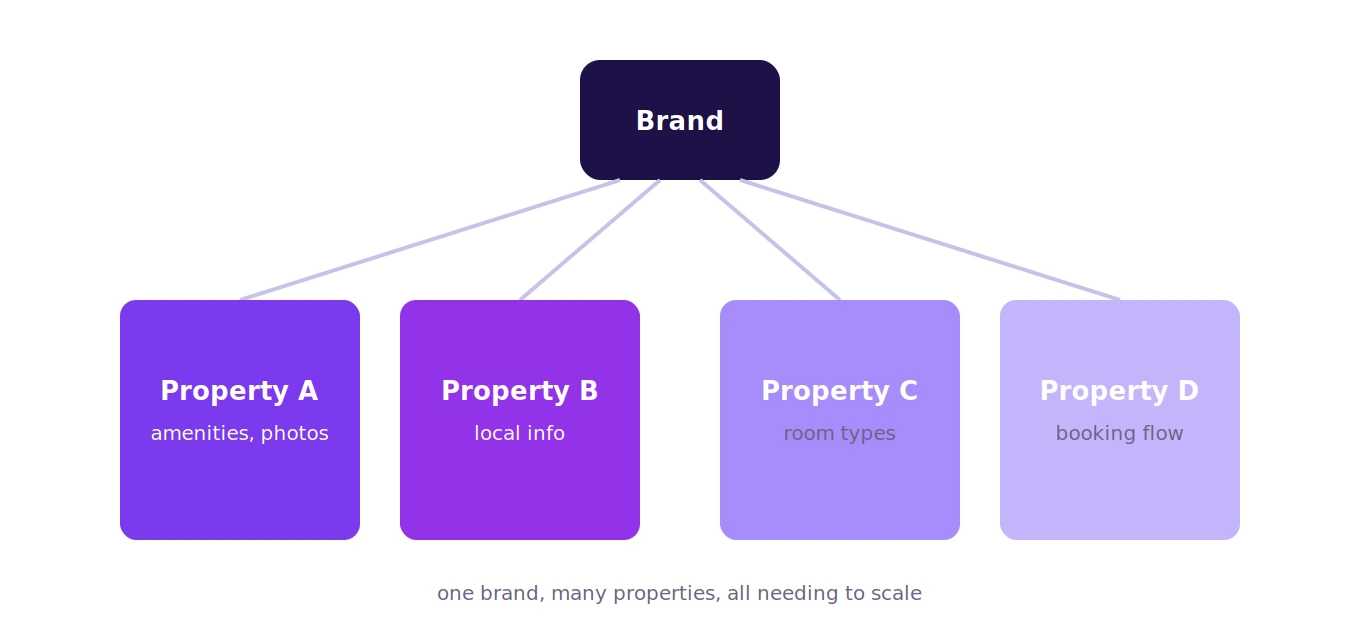
Before getting into Umbraco specifically, it's worth being clear about what makes hotel chain websites genuinely hard to manage well.
You need consistent branding across every property page, while still allowing enough flexibility for each property to show what makes it unique, different amenities, different local attractions, different room types. You need a content structure that scales, adding property number 51 shouldn't require rebuilding your content architecture from scratch. You need local teams or regional managers to be able to update their own property's information without needing to go through a central web team for every small change. And you need all of this to integrate with booking engines, availability systems, and often rate management tools, since the website is directly tied to revenue in a way a typical brochure site isn't.
A CMS that treats every page as a one-off, with no real structure connecting properties together, tends to buckle under this kind of scale pretty quickly.
Where Umbraco's structure actually helps
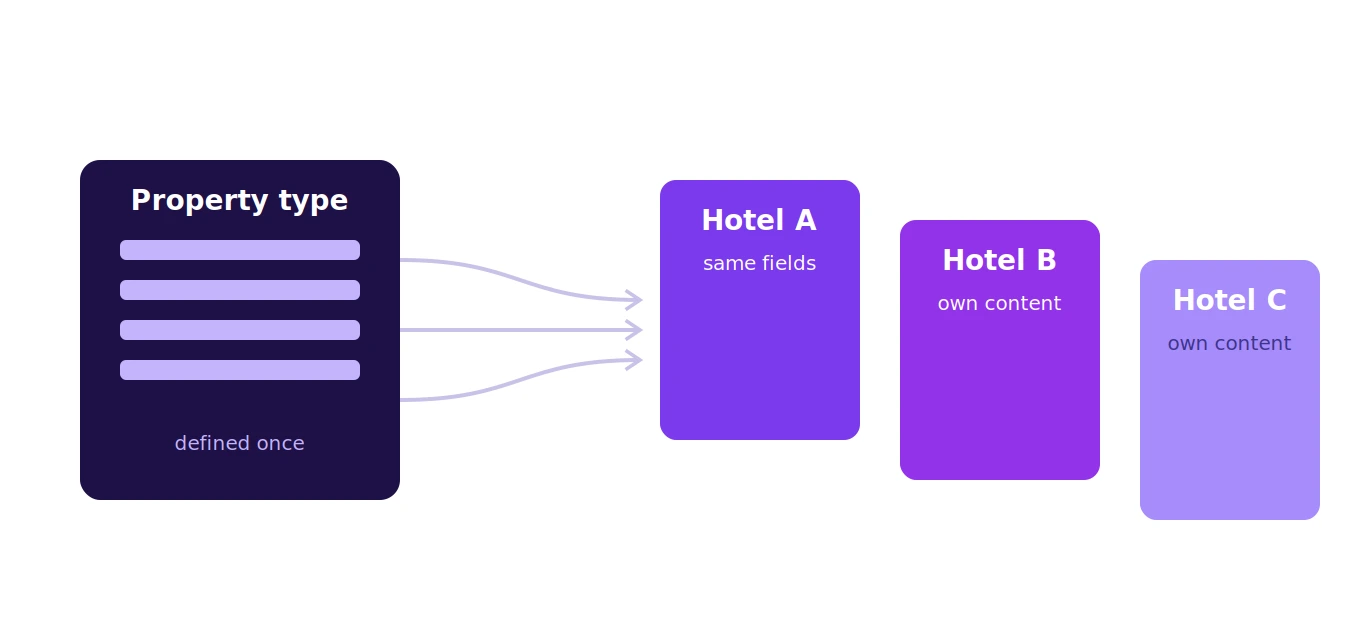
Umbraco's content modeling approach is built around defining reusable content types with specific fields, exactly the kind of structure a hotel chain needs. You can define a "Property" content type once, with fields for amenities, room types, location details, photos, and local information, and then every individual hotel page follows that same consistent structure while still being managed independently.
This matters practically in a few ways. New properties can be added faster, since the structure already exists, someone just needs to fill in that property's specific details rather than designing a new page from scratch. Brand consistency is easier to maintain, since the template and structure are shared, even while the content itself varies property to property. And local or regional staff can be given access to manage just their property's content, without touching anything else on the site, which matters a lot for hotel groups where property-level staff often handle their own local marketing content.
Umbraco's multi-site and multi-language capabilities are also relevant here, particularly for hotel groups operating internationally or wanting locally translated content for each property rather than a single generic language version.
Integration with booking and revenue systems
This is where things get more specific to the hospitality industry, and it's worth being direct about it: Umbraco itself doesn't include booking engine or revenue management functionality. That's not really what a CMS is for. What Umbraco does well is serve as the content and presentation layer, while integrating with a dedicated booking engine or property management system through its API capabilities.
This means the actual booking flow, availability, and rates would typically come from a specialized hospitality technology provider, integrated into pages built and managed in Umbraco. The CMS handles the content and brand experience, while the specialized booking technology handles the transactional side. This division of responsibility is fairly standard across most CMS choices in hospitality, not unique to Umbraco, but it's worth understanding clearly before assuming a CMS alone solves the booking problem.
What to weigh before choosing this route
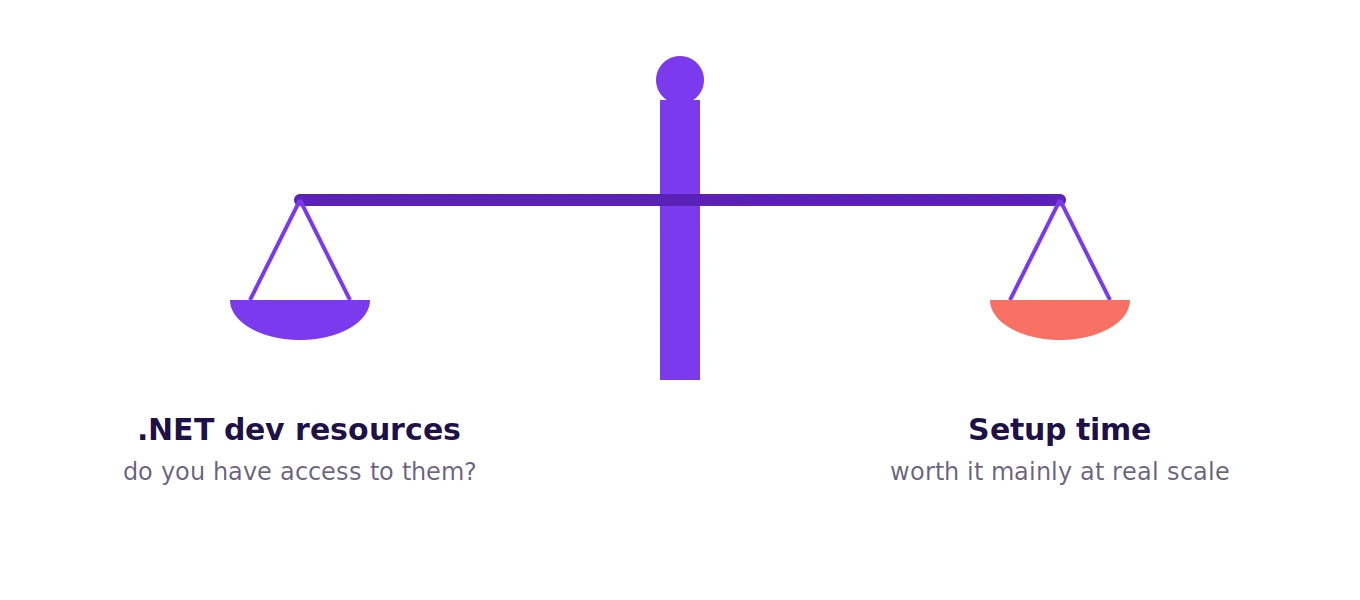
Umbraco requires .NET development expertise, which is a smaller talent pool compared to something like WordPress. If your hotel group doesn't have existing .NET development resources or an agency relationship with that expertise, factor that into your evaluation honestly.
The upfront setup, defining your property content types, building out templates, planning your multi-site structure, takes real planning time before you see the payoff. This isn't a "install and go" platform. The investment tends to pay off specifically at scale, a large multi-property chain benefits far more from this structured approach than a hotel group with just three or four properties might, where the overhead of that setup could outweigh the benefit.
Is it worth considering for your hotel group?
If you're managing a genuinely large number of properties, want consistent branding with property-level content flexibility, need to delegate content management to local teams without losing central control, and have access to .NET development resources, Umbraco is a strong platform worth serious evaluation.
If you're running a small handful of properties, or a single boutique hotel, the structural benefits that make Umbraco compelling at scale may not be worth the additional setup complexity and development requirements compared to a simpler platform.
If your hotel group has gone through this evaluation, or built a multi-property site on Umbraco or a comparable platform, we'd genuinely like to hear how it held up in practice, what worked, what took longer than expected, and what you'd tell another hotel group considering the same path.